
Strong management is built on trust, clarity, and the ability to navigate emotions under pressure. Emotional intelligence (EI) turns everyday leadership moments—feedback, conflict, recognition, and change—into opportunities to motivate people and improve performance. This guide breaks down practical EI skills managers can apply immediately to build resilient teams, reduce friction, and lead with steady confidence.
Research-backed leadership writing consistently points to EI as a differentiator for effective management. For deeper background, see the American Psychological Association overview of emotional intelligence and the classic Harvard Business Review piece on what makes a leader.
EI isn’t a “soft” add-on; it’s a set of behaviors that make leadership clearer when stakes are high. In practical terms, it shows up when managers:
EI improves fastest when it’s broken into trainable parts. The five core skills below are practical, observable, and coachable.
| EI skill | What it looks like as a manager | What the team experiences |
|---|---|---|
| Self-awareness | Names emotions and separates them from facts before responding | Less confusion and fewer mixed signals |
| Self-regulation | Responds calmly; sets boundaries without escalation | Psychological safety and predictability |
| Motivation | Frames goals as progress; celebrates milestones | Higher persistence and ownership |
| Empathy | Clarifies needs; acknowledges stress; asks better questions | More trust and honesty about blockers |
| Social skills | Runs crisp meetings; resolves conflict early; builds partnerships | Better collaboration and speed |
Quick win: pick one skill to “over-index” on for two weeks, then rotate. Managers often try to improve everything at once; targeted practice creates faster, more noticeable change.
Self-awareness is the hinge skill: when it improves, regulation, empathy, and communication improve with it. These routines take minutes, not hours:
Teams don’t need perfect leaders; they need leaders who recover quickly and respond consistently. Regulation techniques help keep tone and decisions aligned with values.
Empathy is not agreement, and it’s not avoiding hard calls. It’s accurately understanding what someone is experiencing so expectations and support can be calibrated.
Motivation is less about pep talks and more about removing friction, showing progress, and increasing ownership. These levers tend to work across roles and seniority:
When a conversation is emotionally charged, structure keeps it productive. A simple flow that reduces defensiveness:
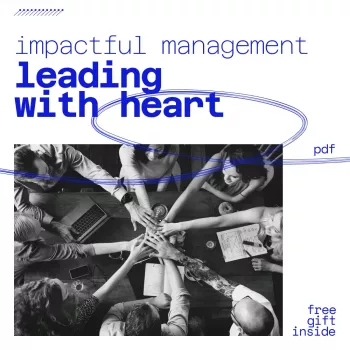
Leading with Heart: Emotional Intelligence Strategies for Impactful Management – Essential Guide for Managers, EI Techniques, and Team Motivation is designed as a quick-grab playbook for day-to-day leadership moments.
For managers who also lead creative or marketing workflows, tighter planning can lower friction and misunderstandings across roles. A checklist-based companion like How to Make AI Storyboards for Videos – Step-by-Step Checklist for Creators, Filmmakers & Marketers | AI Video Planning Guide can help teams align faster on expectations and deliverables.
Emotional intelligence is learnable: self-awareness, regulation, empathy, and communication improve with repetition, reflection, and feedback. Small routines practiced daily tend to create the fastest change.
Validate the feeling first, then clarify facts and impact, and set specific expectations for what changes. Agree on support and measurable next steps so accountability stays clear and fair.
Use a brief pause and breath, label the emotion without blaming, and switch to facts-first language. Ask one clarifying question, summarize what you heard, and propose a concrete next step or boundary.











Leave a comment