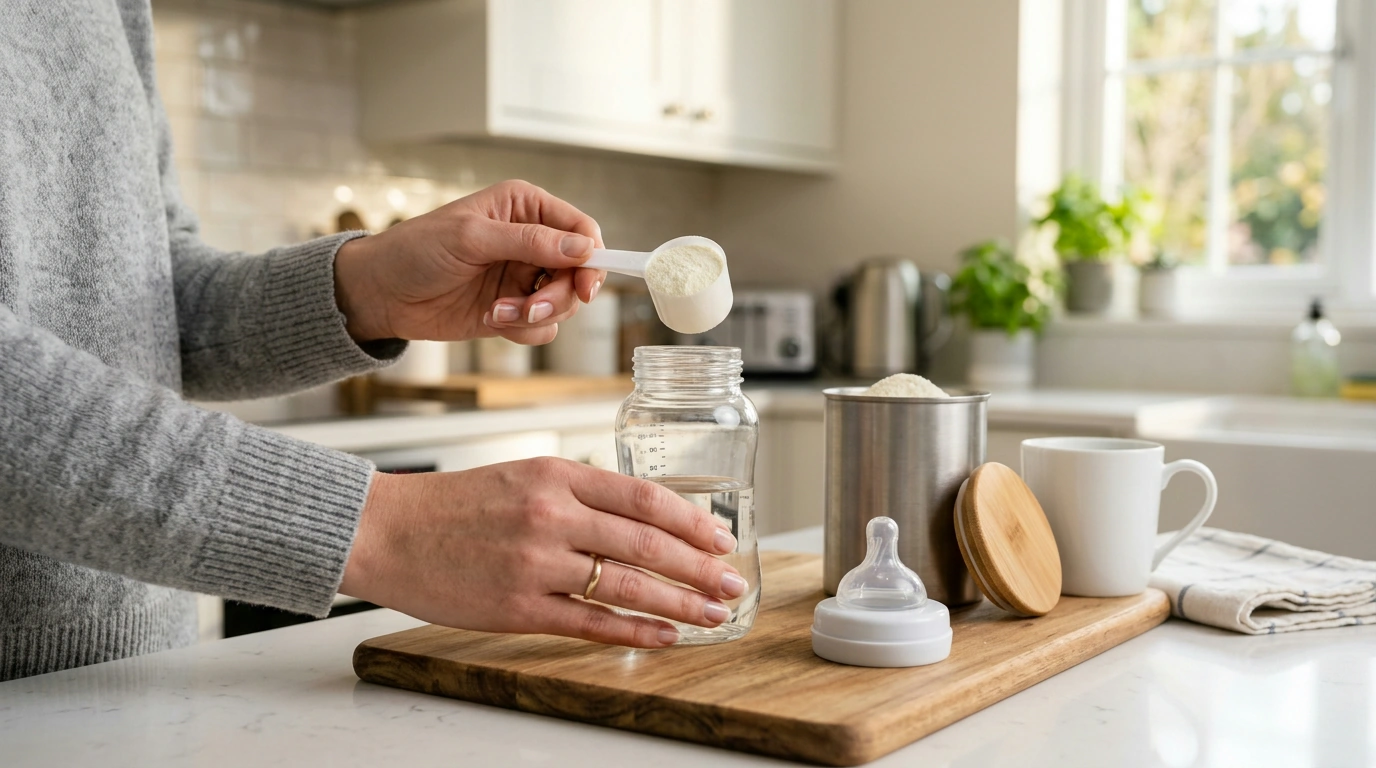
A calm bottle-preparation routine can make feeding time feel more manageable, especially when you are caring for a newborn. A clean space, accurate measurements, and a plan for using or storing formula are good places to start. For more guidance, see The safety of at home powdered infant formula preparation.
Our Mixing Baby Bottles Safely and Easily eBook offers a step-by-step reference for new parents. Keep your formula label close, too: its instructions and your healthcare professional’s advice take priority over a general guide. For further reading, see Infant formula: 7 steps to prepare it safely.
Before you open the formula, wash your hands thoroughly with soap and water. Clean the surface where you will prepare the bottle, and gather clean bottle parts and preparation equipment. Check that nipples, caps, bottles, and any mixing tools have been washed according to the manufacturer’s instructions.
Sanitizing feeding items is especially important for babies under 2 months old, babies born prematurely, and those with weakened immune systems. The CDC’s feeding-item cleaning guidance explains how to clean, sanitize, and store these items safely.
Next, check the formula container. Do not use formula past its expiration date or from a damaged container. If the packaging or formula looks questionable, contact the manufacturer or your healthcare professional before using it.
Formulas do not all have the same preparation directions. Read the label on the specific product each time, particularly if you have switched brands, types, or container sizes. Ready-to-feed, concentrated liquid, and powdered formulas are handled differently.
Powdered formula is not sterile. If your baby is under 2 months old, was born prematurely, or has a weakened immune system, ask your healthcare professional about formula choice and safer preparation. They can help you decide whether a sterile liquid formula is appropriate and whether additional precautions are needed.
| Step | What to check |
|---|---|
| Clean | Hands, work surface, and bottle parts are clean. |
| Measure | Water and formula amounts match the product instructions exactly. |
| Mix | Follow the formula label’s preparation directions. |
| Use or store | Follow safe timing and refrigeration guidance. |
It can be tempting to add extra water to stretch formula or extra powder to make a bottle seem more filling. Do neither. Incorrect dilution can harm your baby, so measure both ingredients exactly as directed. If you have concerns about how much your baby is eating, talk with your healthcare professional rather than changing the concentration.
Use prepared formula within 2 hours of preparation and within 1 hour from the start of feeding. If you do not use the prepared formula immediately, refrigerate it promptly and use it within 24 hours. Discard any formula left in the bottle after a feeding; bacteria from your baby’s mouth can grow in the remainder.
Never warm a bottle in a microwave. Microwaves can heat unevenly and create hot spots that could burn your baby. For more details, including handling opened ready-to-feed and concentrated formulas, follow the product label and current CDC formula preparation and storage guidance.
When you are away from home, plan how you will keep supplies clean and any prepared formula safely refrigerated. A change in setting does not change the feeding and storage time limits.
Our team knows that new routines can take practice. The Mixing Baby Bottles Safely and Easily eBook is a step-by-step formula mixing guide you can use alongside the formula label and your healthcare professional’s advice. It is in stock for $22.99; visit the product page to learn more.
Revisit your routine whenever you change formula products or your circumstances change. If you are also planning a family drive, our in-stock Smart Routes road trip planning guide is a separate resource for planning a route with stops. Allow time to feed your baby and handle bottles safely along the way.
Follow your formula label’s instructions. CDC guidance for powdered formula advises measuring the water first, then adding the exact amount of powder.
Yes. Refrigerate prepared formula promptly if you do not use it immediately, and use it within 24 hours. Follow the product label and current CDC guidance.
No, powdered formula is not sterile. If your baby is at higher risk of infection, ask your healthcare professional about formula choice and preparation.












Leave a comment