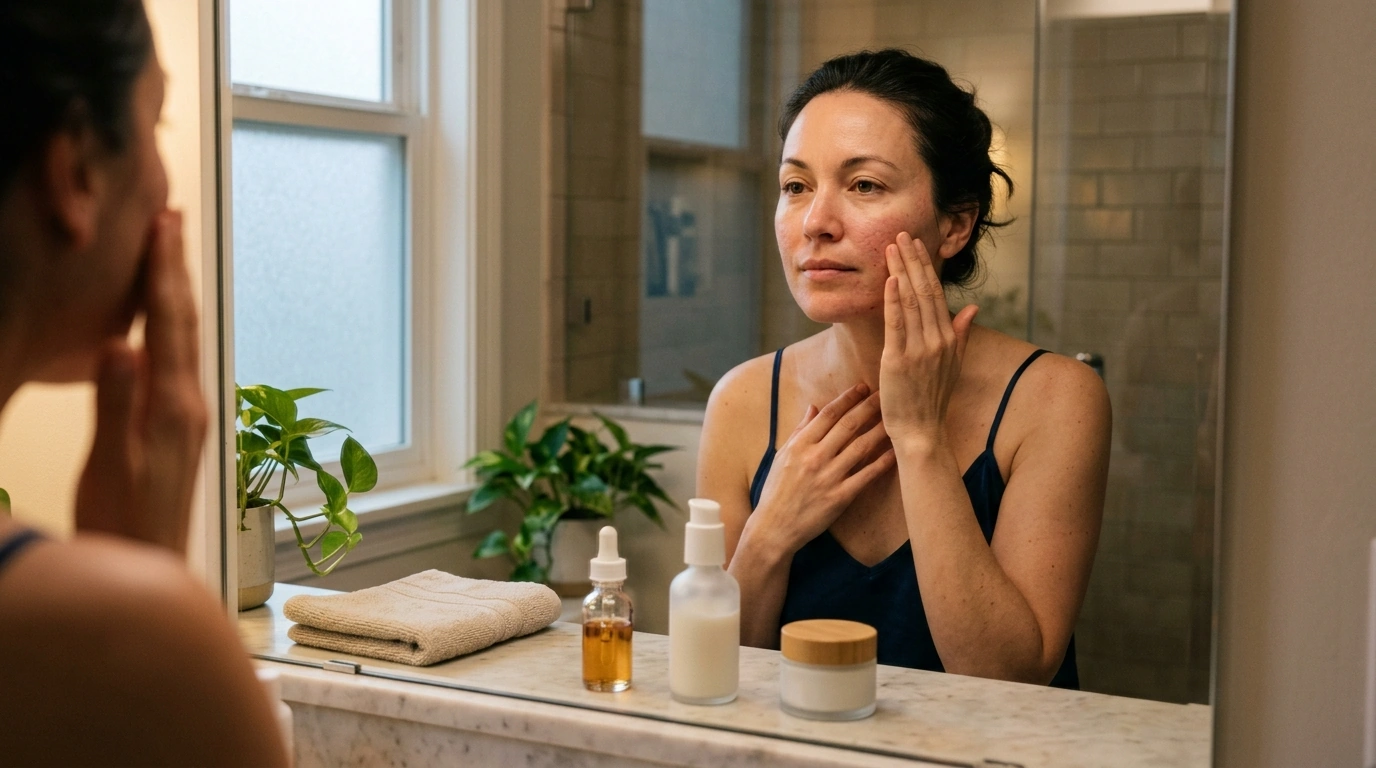
Uneven tone can show up as dark spots, post-breakout marks, redness, or dull patches—and the fix is rarely a single “miracle” product. The most reliable results come from pairing proven ingredients with a steady routine, gentle pacing, and daily sun protection. Use the sections below to identify the type of uneven tone, choose ingredients that match it, and build a simple routine that supports consistent, visible improvement without over-irritating the skin.
“Uneven tone” is an umbrella term that covers a few different patterns, and matching the pattern to the right approach can save weeks of trial-and-error. The most common culprits include post-inflammatory hyperpigmentation (PIH) after breakouts, sun spots and uneven tanning, melasma-like patches, lingering redness after irritation, and general dullness or lack of clarity.
A helpful first step is separating pigment from redness. Brown, gray, or tan marks are usually melanin-related (pigment). Pink or red marks often have more to do with blood vessels and inflammation, which means they may respond better to calming and barrier support than to aggressive exfoliation.
Why it happens often comes down to a combination of UV exposure, inflammation, barrier disruption, hormones, friction (including scrubbing), and doing “too much” too fast with acids or retinoids. Expect timelines to be gradual: an early glow can show up in a few weeks, while stubborn spots commonly take 8–12+ weeks of consistent care. If you notice rapidly changing patches, painful irritation, or persistent melasma concerns, it’s worth seeking professional guidance.
| Type of uneven tone | Typical look | Helpful ingredient categories | Key routine note |
|---|---|---|---|
| Post-breakout dark marks (PIH) | Brown/gray spots where blemishes healed | Azelaic acid, niacinamide, vitamin C, gentle retinoids | Avoid picking; prioritize sunscreen daily |
| Sun spots / uneven tan | Freckles or darker patches on exposed areas | Vitamin C, retinoids, AHAs (carefully), tyrosinase inhibitors | Sun protection is non-negotiable for progress |
| Red marks (post-inflammatory erythema) | Pink/red areas after irritation or acne | Niacinamide, azelaic acid, soothing barrier ingredients | Go easy on strong acids; reduce triggers |
| Dullness / rough texture | Lack of clarity; uneven surface | AHAs, mild BHAs, retinoids, hydration support | Introduce exfoliation slowly to protect barrier |
Most brightening routines work best when they combine (1) daily UV defense and (2) one or two well-tolerated actives used consistently.
L-ascorbic acid and stable derivatives help skin look brighter and more even, while also defending against oxidative stress. Vitamin C typically fits best in the morning under sunscreen for a “shield + glow” effect.
Niacinamide supports barrier function and can improve the look of uneven tone and visible redness. It’s generally compatible with many routines and tends to be a steady, low-drama addition.
Azelaic acid is a standout when uneven tone includes both pigment and redness. It’s often well-tolerated, making it a strong option for sensitive or acne-prone skin that can’t handle frequent exfoliation.
Retinol, retinal, and (where appropriate) adapalene encourage cell turnover and can improve the look of spots over time. The trade-off is irritation risk, so start slowly and moisturize well to prevent a “brightening” plan from backfiring into more inflammation.
For additional background on dark spots and PIH, see the American Academy of Dermatology’s overview on hyperpigmentation and DermNet’s guide to post-inflammatory hyperpigmentation.
Keep mornings consistent and sunscreen-centered: gentle cleanse (or rinse), a brightening/antioxidant step (vitamin C or niacinamide), moisturizer as needed, then broad-spectrum sunscreen. The American Academy of Dermatology emphasizes correct, regular sunscreen use—see their Sunscreen FAQs for practical guidance.
| Day | Night treatment | Notes |
|---|---|---|
| Mon | Retinoid | Moisturize well; keep the rest simple |
| Tue | Azelaic acid or niacinamide | Good option for redness + marks |
| Wed | Recovery night | Barrier-focused moisturizer only |
| Thu | Retinoid | Reduce frequency if stinging or peeling |
| Fri | AHA (optional) | Use sparingly; stop if sensitivity rises |
| Sat | Azelaic acid or recovery | Choose based on how skin feels |
| Sun | Recovery night | Reset; prioritize hydration |
If a simple routine still feels like guesswork, a structured plan can help you stay consistent long enough to see real changes. Brighten & Balance: Uneven Tone Solutions – Best Ingredient Guide for Uneven Tone, Skincare Routine & Digital Guide includes step-by-step morning and night templates, ingredient explanations matched to spots vs. redness vs. dullness, and tracking pages to catch irritation early while you measure progress over weeks.
If you prefer a checklist-style format for building habits and sticking to a sequence, How to Make AI Storyboards for Videos – Step-by-Step Checklist for Creators, Filmmakers & Marketers | AI Video Planning Guide is another structured resource designed around clear steps and repeatable workflows.
Early brightness can show up in a few weeks, but stubborn spots often take 8–12+ weeks with consistent sunscreen and a well-tolerated routine.
They’re often easiest to tolerate when separated: vitamin C in the morning and a retinoid at night. Start slowly and adjust frequency if you notice stinging, peeling, or persistent redness.
Daily broad-spectrum sunscreen is the biggest lever, paired with minimizing inflammation—avoid picking, keep cleansing gentle, and don’t over-exfoliate.













Leave a comment