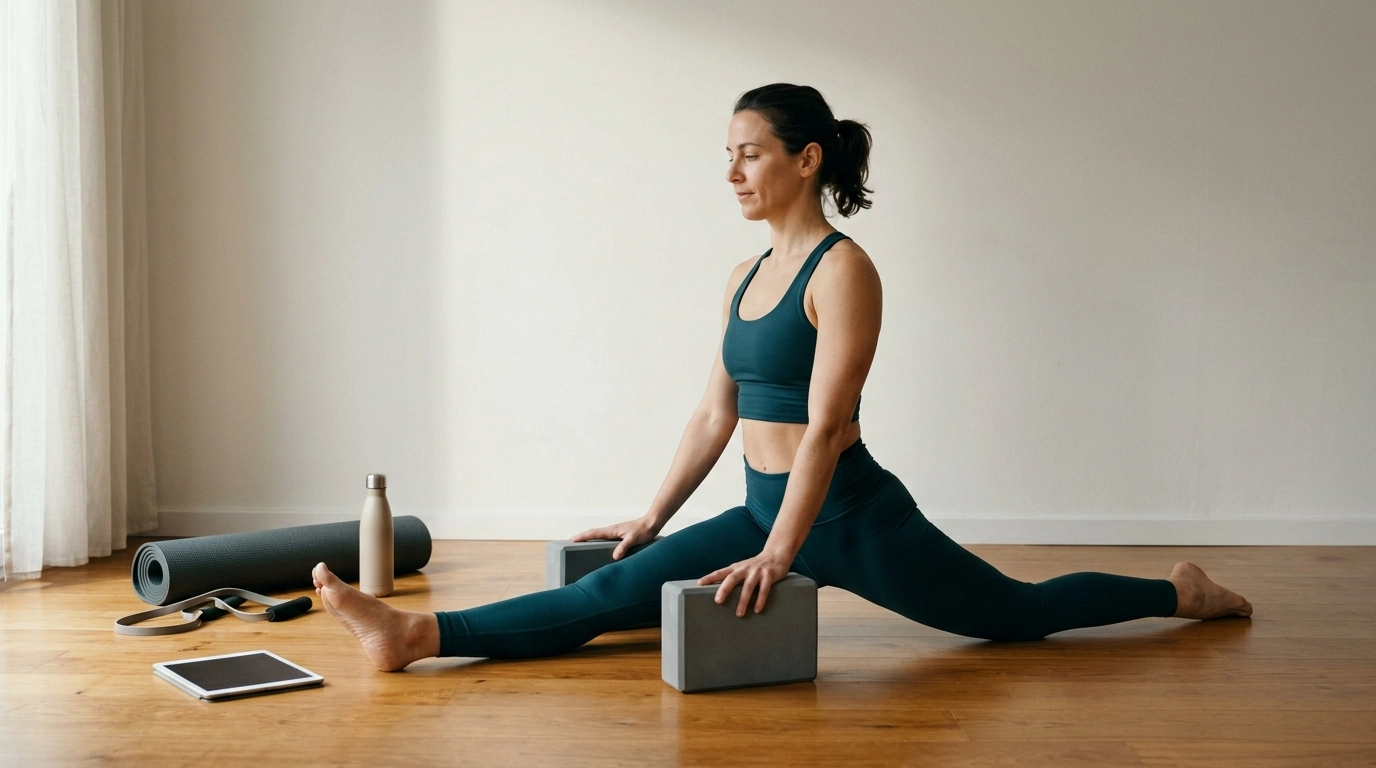
Building split flexibility is simplest when training follows a repeatable structure: warm-up, targeted mobility, progressive holds, and consistent recovery. Instead of forcing depth, the goal is to improve range of motion while keeping your hips, knees, and lower back organized—so the flexibility you gain is usable and controllable. Below is a practical framework for front splits and middle splits, plus how the Split Ready, Faster: Ultimate eBook to Increase Flexibility for Splits – Step-by-Step Guide, Stretching Techniques & Personalized AI Prompts supports day-to-day training with clear sequences and guidance.
Getting split-ready isn’t only about relaxing into a deeper stretch. Safer progress comes from balancing passive flexibility (how far you can sink when relaxed) with active flexibility (how much control you have at the edge of your range).
This eBook is built for people who want a clear plan rather than random stretches. It organizes flexibility work into a progression that targets both front splits and middle splits.
If you like learning from checklists and step sequences in other areas too, How to Make AI Storyboards for Videos – Step-by-Step Checklist for Creators, Filmmakers & Marketers | AI Video Planning Guide is another structured, follow-along format for planning creative work.
Do light cardio (brisk walking, cycling, easy jumping jacks), then joint circles and leg swings. Warming up matters because it generally improves comfort and helps you access range more safely. For general flexibility guidance, see the NHS flexibility exercises overview.
If you enjoy reading deeper summaries of how stretching affects range of motion, you can browse systematic reviews and research summaries via PubMed search results on stretching and range of motion.
| Day | Focus | Main work (20–35 min) | Intensity target |
|---|---|---|---|
| Mon | Front splits | Warm-up + hip flexor sequence + hamstring sequence + short end-range holds | Moderate |
| Tue | Recovery | Light dynamic mobility + gentle long holds | Easy |
| Wed | Middle splits | Warm-up + adductor prep + pancake progression + isometric holds | Moderate |
| Thu | Active control | End-range strength drills + short technique holds | Moderate |
| Fri | Front splits | Repeat Monday with small progression (time or control) | Moderate-high |
| Sat | Middle splits | Repeat Wednesday with small progression (time or control) | Moderate-high |
| Sun | Rest | Walking + optional 5-minute mobility reset | Very easy |
It can take anywhere from several weeks to many months depending on your starting flexibility, how often you train, and how well you recover. Consistent, moderate sessions tend to beat infrequent high-intensity stretching that leaves you too sore to repeat.
Daily practice can be safe if you alternate intensity—mix harder end-range strength days with lighter mobility or recovery days. If soreness is lingering or you feel sharp pain or joint pinching, reduce intensity and prioritize technique and rest.
Front splits usually emphasize hip flexors on the back leg and hamstrings on the front leg, plus pelvic control to avoid over-arching. Middle splits focus more on adductors (inner thighs) and hip external rotation; scheduling alternating focus days often helps manage fatigue while building both.













Leave a comment