Build Self-Discipline Daily With a Simple Habit Loop
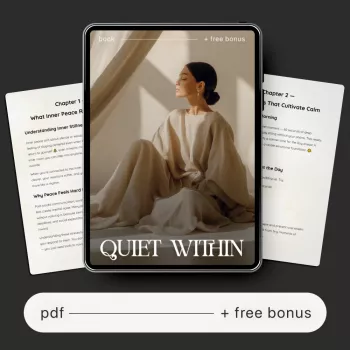
Stronger Every Day: A Practical Digital Guide to Build Self-Discipline and Daily Habits
Self-discipline gets easier when it’s built from small, repeatable systems instead of willpower spikes. This digital guide and mindset workbook is designed to help turn motivation into a daily habit—through simple routines, clear prompts, and a steady structure that supports follow-through even on low-energy days.
What “self-discipline” looks like in real life
Discipline isn’t a personality trait you’re born with—it’s what your days start to look like when your actions have a default setting.
- Consistency over intensity: small actions done often beat occasional big pushes.
- Follow-through triggers: starting is usually the hardest step; systems reduce friction at the start.
- Emotional neutrality: discipline improves when actions aren’t negotiated based on mood.
- Identity-based momentum: habits stick when they align with the kind of person being practiced daily.
If you’ve ever surprised yourself by showing up even when you didn’t feel like it, you’ve already experienced the core of discipline: a plan that doesn’t require a perfect mood.
Why motivation fades (and what to use instead)
Motivation is helpful, but unreliable. It can swing with sleep, stress, workload, and your environment—sometimes within the same day. A sturdier approach is to design a habit that still runs when motivation is low.
- Motivation is variable: energy, stress, sleep, and environment can change it fast.
- Replace “feeling ready” with a minimum standard: a tiny version of the habit that counts.
- Use cue-based routines: attach a new habit to an existing anchor (after coffee, after brushing teeth, after opening the laptop).
- Design for bad days: a fallback plan prevents all-or-nothing spirals.
This aligns with behavior science approaches that emphasize making actions easier in the moment—reducing friction and increasing clarity—rather than waiting for high inspiration. For a helpful overview, see Stanford’s Behavior Model framework at Stanford Behavior Design Lab (BJ Fogg).
How the Stronger Every Day workbook helps build a disciplined routine
The Stronger Every Day — Digital Self-Discipline Guide | Mindset Workbook, Daily Habit Builder, Motivation eBook | how to boost self-discipline naturally is built for the unglamorous middle: the days when you’re busy, distracted, or not at your best. Instead of pushing harder, it helps you set up a repeatable rhythm.
- Mindset prompts that move focus from short-term comfort to long-term outcomes.
- Daily habit builder pages to track actions, not just intentions.
- Guided reflections to spot patterns: triggers, distractions, and the situations where discipline breaks.
- Simple planning tools that reduce decision fatigue and make the next step obvious.
- A repeatable structure that supports steady progress across work, health, learning, and personal goals.
It’s also grounded in the way habits form through repeated cues and responses over time—an idea widely discussed in health and psychology literature. For additional reading, explore habit formation research collections via the National Library of Medicine (PMC).
A simple daily structure that makes discipline feel natural
Discipline becomes easier when you stop asking yourself, “What should I do?” and start following a small loop that repeats. The goal is clarity, not pressure.
- Morning (2–5 minutes): pick 1–3 priorities and define the smallest “win” for each.
- Midday (1 minute): quick check-in—continue, adjust, or shrink the task to keep it alive.
- Evening (3 minutes): review what worked, what didn’t, and one tweak for tomorrow.
- Use a single visible tracker: when progress is visible, follow-through becomes easier.
| Time | Prompt | Goal |
|---|---|---|
| Morning | What’s the smallest action that counts today? | Reduce friction and start quickly |
| Midday | What’s the next 5-minute step? | Prevent stall-outs |
| Evening | What helped most? What will be adjusted tomorrow? | Build learning and consistency |
Over time, this loop builds self-control in a practical way: fewer decisions, fewer negotiations, and faster resets. For a clear definition of self-control as a psychological concept, see the APA Dictionary of Psychology: Self-control.
Common discipline blockers (and practical fixes)
Most “lack of discipline” is actually a design problem. Adjust the environment and the size of the habit, and the behavior often improves without extra strain.
Pairing tools for faster progress (optional digital guides)
- Weekly reviews: A Smart Guide to Tracking and Achieving Your Goals – AI Weekly Review System for Goals, eBook, Checklist, Productivity Guide helps you track what’s working, adjust priorities, and stay aligned without overthinking.
- Kind self-talk support: Using AI to Support Kind Self-Talk When You Feel Low – Digital Guide for Emotional Wellness, Mindful Healing & How to Use AI for Kind Self-Talk When I Feel Low focuses on reducing shame and strengthening bounce-back—often the hidden key to long-term consistency.
- Planning checklists: Using ChatGPT for Goal Setting and Planning Checklist | chatgpt for goal setting and planning Printable | Productivity Planner & Digital Download for Personal and Business Growth turns vague goals into clear next actions with structured prompts.
Getting started in 10 minutes
FAQ
How long does it take to build self-discipline naturally?
Self-discipline grows through repeated practice, especially when you keep the habit small and consistent. Use a clear cue, track your follow-through, and treat missed days as a quick reset rather than a reason to stop.
What if motivation is low every day?
Use a minimum habit that still counts, reduce friction in your environment, and keep a simple daily check-in so you always know the next small step. Progress can continue even with low motivation when the system is easy to restart.
Is a digital workbook better than a paper planner for habits?
Digital workbooks are portable, reusable, and often include structured prompts that make the next action obvious, while paper planners can feel more tactile and reduce screen time. The best option is the one you’ll actually open daily and use consistently.









Leave a comment