Mindful Moments: 60-Second Resets to Feel Present

Mindful Moments: A Simple Way to Feel More Present in Everyday Life
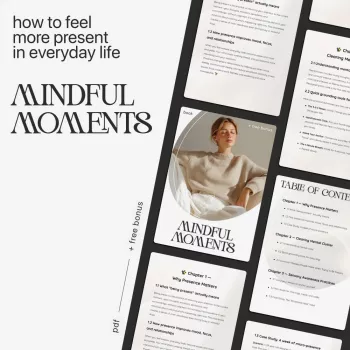
Feeling distracted doesn’t mean something is wrong—it often means life is moving fast. “Mindful Moments” is a digital mindfulness eBook and self-care guide designed to help bring attention back to what’s happening right now, using small practices that fit into real routines. The goal isn’t perfection or nonstop calm; it’s building a repeatable way to return to presence, focus, and steadier emotional balance throughout the day.
What “being present” looks like in real life
Presence isn’t a blank mind or a spa-day mood. It’s a practical skill: noticing what’s happening and choosing how to respond.
- Noticing what is happening (body sensations, thoughts, surroundings) without needing to fix it immediately
- Doing one thing at a time more often: one conversation, one task, one meal, one short break
- Catching autopilot moments early (scrolling, rushing, multitasking) and gently resetting
- Using brief check-ins to reduce mental clutter and strengthen attention over time
Why presence feels hard lately
If it feels harder to stay focused, there are real reasons—and most are environmental and biological, not personal failures.
- Attention overload: constant notifications and rapid context-switching can train the brain to scan rather than settle.
- Stress response: worry about the future and replaying the past can become default modes under pressure.
- Multitasking habits: splitting attention often increases fatigue and reduces satisfaction with the moment.
- Unmet basic needs: hunger, dehydration, lack of sleep, and long periods without movement can amplify distraction.
Mindfulness isn’t about forcing calm—it’s about building a “return path” back to the present. For a research-backed overview of mindfulness and meditation, see the American Psychological Association’s mindfulness meditation resource and the NIH NCCIH meditation guide.
A quick reset: the 60-second mindful moment
This is a simple pattern you can use almost anywhere. The steps are short on purpose—small enough to repeat, even on busy days.
- Stop: pause what’s happening for one full breath.
- Ground: feel feet on the floor or the weight of the body in a chair.
- Breathe: take 3 slow breaths, slightly longer exhale than inhale.
- Name: label the current experience (“thinking,” “tight shoulders,” “rushing,” “sound of traffic”) without judgment.
- Choose: return to the next right action (one small step) instead of trying to solve everything at once.
That “Name” step is the secret sauce. Labeling experience creates a tiny bit of space—often enough to reduce reactivity and make the next decision simpler.
Everyday micro-practices that build focus
Micro-practices work because they’re easy to attach to life as it already is. They’re less about changing your schedule and more about changing your moments.
- Morning: before picking up the phone, take 5 breaths and set a one-word intention (steady, kind, clear).
- Work blocks: begin with a 20-second posture check—relax jaw, drop shoulders, soften gaze.
- Transitions: use doorways, elevators, and car rides as cues to notice breathing and unclench hands.
- Meals: take the first three bites slowly, noticing taste and texture to signal the nervous system to downshift.
- Evening: a 2-minute “mental unload” note—write worries and tomorrow’s first step, then close the loop.
Mindful moments you can use today
| Everyday moment | What to do | Time | What it supports |
|---|---|---|---|
| Waking up | 3 slow breaths + notice one sound in the room | 30–60 sec | Less reactive start, clearer attention |
| Before a meeting | Feel feet + relax shoulders + one steady exhale | 20–40 sec | Presence, calmer communication |
| Mid-scroll | Look away, blink slowly, name the urge to keep scrolling | 15–30 sec | Interrupts autopilot |
| Waiting in line | Count 10 breaths or notice 5 things you can see | 1–2 min | Patience, reduced agitation |
| Before sleep | Hand on chest, longer exhale, “today is complete” phrase | 1–3 min | Downshifts stress, easier sleep |
How the Mindful Moments digital toolkit fits into a busy schedule
When time is tight, the most helpful plan is the one you’ll actually repeat. A simple structure prevents mindfulness from becoming “one more thing.”
If you want a ready-made set of brief practices, Mindful Moments: How to Feel More Present in Everyday Life (Digital eBook) is designed to be used in short bursts—more like a “reset toolkit” than a long course.
A simple weekly rhythm for steadier presence
Presence gets easier when your inner voice is supportive. For a gentle, structured approach, consider Using AI to Support Kind Self-Talk When You Feel Low (Digital Guide).
Common mistakes that make mindfulness feel frustrating
When your attention is scattered, it also helps to reduce “open loops” so your brain isn’t constantly reminding you of what you might forget. A structured review habit can support this, like A Smart Guide to Tracking and Achieving Your Goals (AI Weekly Review System).
When to seek extra support
FAQ
How long should a mindful moment be to actually help?
Even 30–60 seconds can interrupt autopilot and help you shift from reactive to intentional. Consistency matters more than duration, so 1–3 brief resets per day often works better than occasional long sessions.
Can mindfulness help with focus at work or school?
Yes—brief grounding and single-tasking reduce context switching and mental “drag.” Try a few steady breaths before you start, work in 25–45 minute focus blocks, and use transitions (like opening your laptop) as quick reset cues.
What if mindfulness makes me more aware of stress?
That can be a normal early effect of paying closer attention. Keep practices shorter, try eyes-open grounding (sounds, sights, feet on the floor), and seek professional support if distress escalates or trauma symptoms appear.











Leave a comment